Case study · 3D product site
Suburbia Skaters
A 3D skateboard brand site in Next.js and Three.js: build your own board in real time, make the hero board do tricks, and edit every section in Prismic. Built in 10 days.
- My role
- Built it alone: 3D, animation and the CMS
- Team
- Solo
- Timeline
- Oct 2025, 10 days
- Platform
- Next.js site with Prismic as the CMS
01 Overview
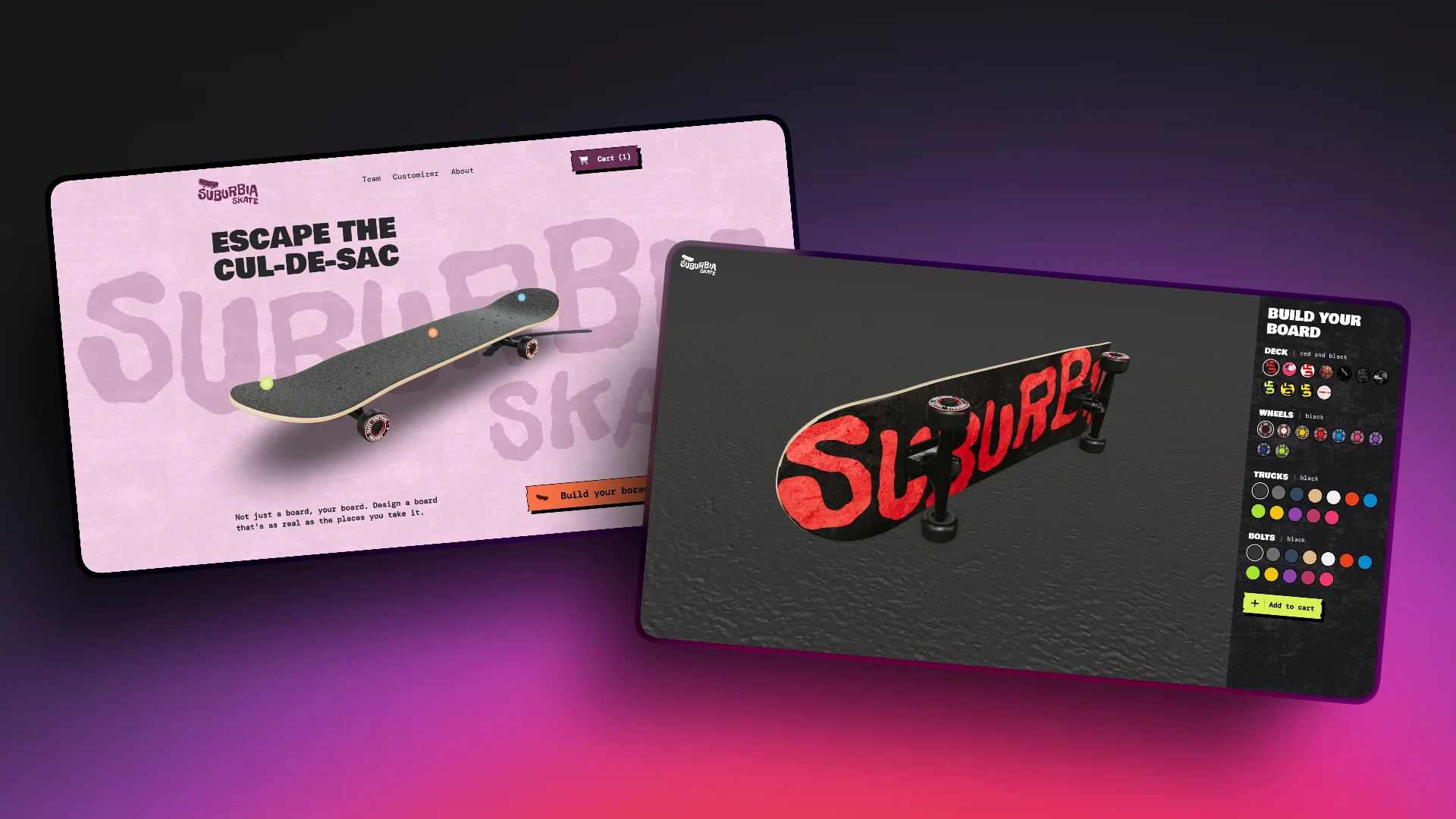
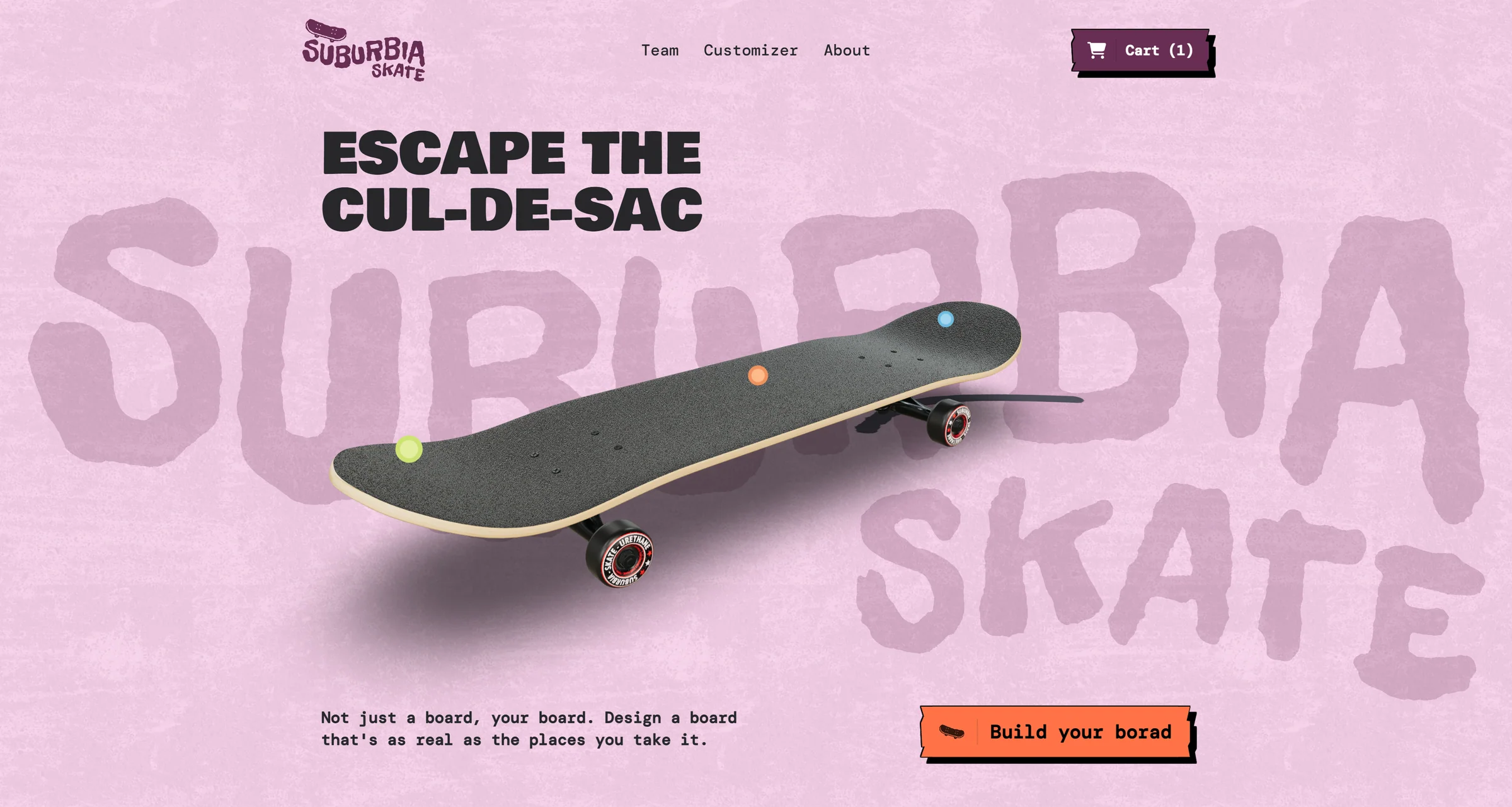
Paragraph: Suburbia is a website for a fictional skateboard brand. Visitors click the board in the hero to watch it do tricks, browse the latest decks and meet the team, then build their own board in 3D: pick the deck, wheels, trucks, and bolts, and see it change as they choose.
- 10 Days
- 4 Board parts to customiz
- 3 Tricks on the hero board
02 Problem
Paragraph: I wanted to go deeper on 3D in the browser and on a headless CMS: a site that feels like a product you can hold, while a marketer can still change every section without a developer.
Constraints
A 3D model, a video, and a physics scene on one page, which all had to stay smooth on phones.03 My role
I built the whole site and deployed it on Vercel.
- 3D builderBuilt the board builder with React Three Fiber: textures and colors change live, and the camera moves to the part you pick
- TricksAnimated an ollie, a kickflip and a frontside 360 with GSAP timelines on the 3D board
- ContentModeled 5 page sections and 5 content types in Prismic, with previews and refresh on publish
- PhysicsBuilt a footer of skateboards you can throw around with Matter.js
- PerformanceLoaded the video and the physics only when they come into view
- Frontend
 Next.js
 React
 TypeScript
 JavaScript
 three.jsGSAP
 Tailwind CSS
 ESLint
 CSS
 HTML
- 3D and motion
- three.jsGSAP
- Hosting and tools
 Vercel
 Git
 GitHub
04 Key decisions
The choices that shaped the product. Open one to see why it was made and what it cost.
The board lives in the link
What we chose
Each choice of deck, wheels, trucks, and bolts is saved in the page's URL
Why
A visitor can share their exact board, and the server draws it on the first load.
Trade-off
The URL updates on every click, and a part removed from the CMS falls back to the default.
Every section from the CMS
What we chose
Prismic slices for every page section, with a webhook that refreshes the cache when content is published
Why
A marketer can add products, riders, and videos without a developer, and pages stay fast between changes.
Trade-off
The site depends on Prismic, and each new kind of section needs its own content model.
Load heavy parts only when seen
What we chose
The YouTube video and the physics scene start only near or inside the screen, with 3 boards instead of all of them on phones
Why
The first screen stays fast, and phones aren't asked to run physics nobody is looking at.
Trade-off
Extra code for each case, and the video appears a moment after it scrolls in.
05 Result
Live on Vercel since October 2025, with a 3D board builder, a hero board that does tricks, and every section editable in Prismic.
- 5 Page sections in the CMS
- 5 Content types
- 3 Tricks animated with GSAP
What I learned
Rewrite this in your words, for example: "This project taught me to treat 3D on the web as a performance problem first: load it late, show less on phones and keep animations short. It also showed me how a headless CMS lets a non-developer own a site's content."
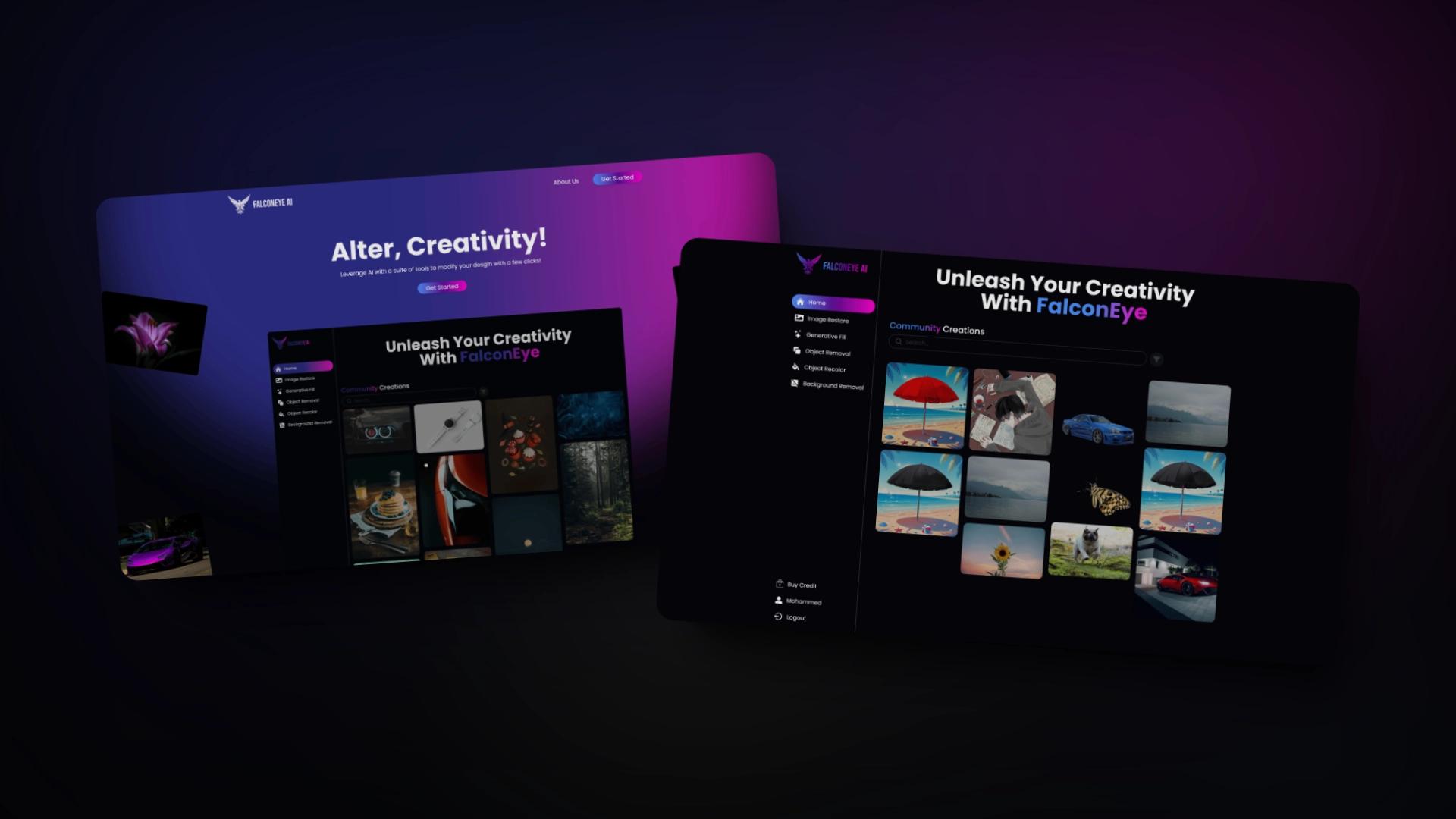
Next project: Falcon Eye AI
A browser tool for AI image edits: remove objects or backgrounds, recolor, fill and enhance in a few clicks.
Questions