Case study 01 · Graduation project
NEOTERZ
Computer vision that counts store visitors, flags theft and analyzes the results, so owners can make better decisions and protect their business.
- My role
- Team lead and PM, AI, frontend, UI/UX, logo
- Team
- 2, with Abubaker Mohammed (opens in a new tab)
- Timeline
- Oct 2023 – Jun 2024, 8 months
- Context
- B.Sc. graduation project, King Abdulaziz University
- Platform
- Responsive web app with AI services
01 Overview
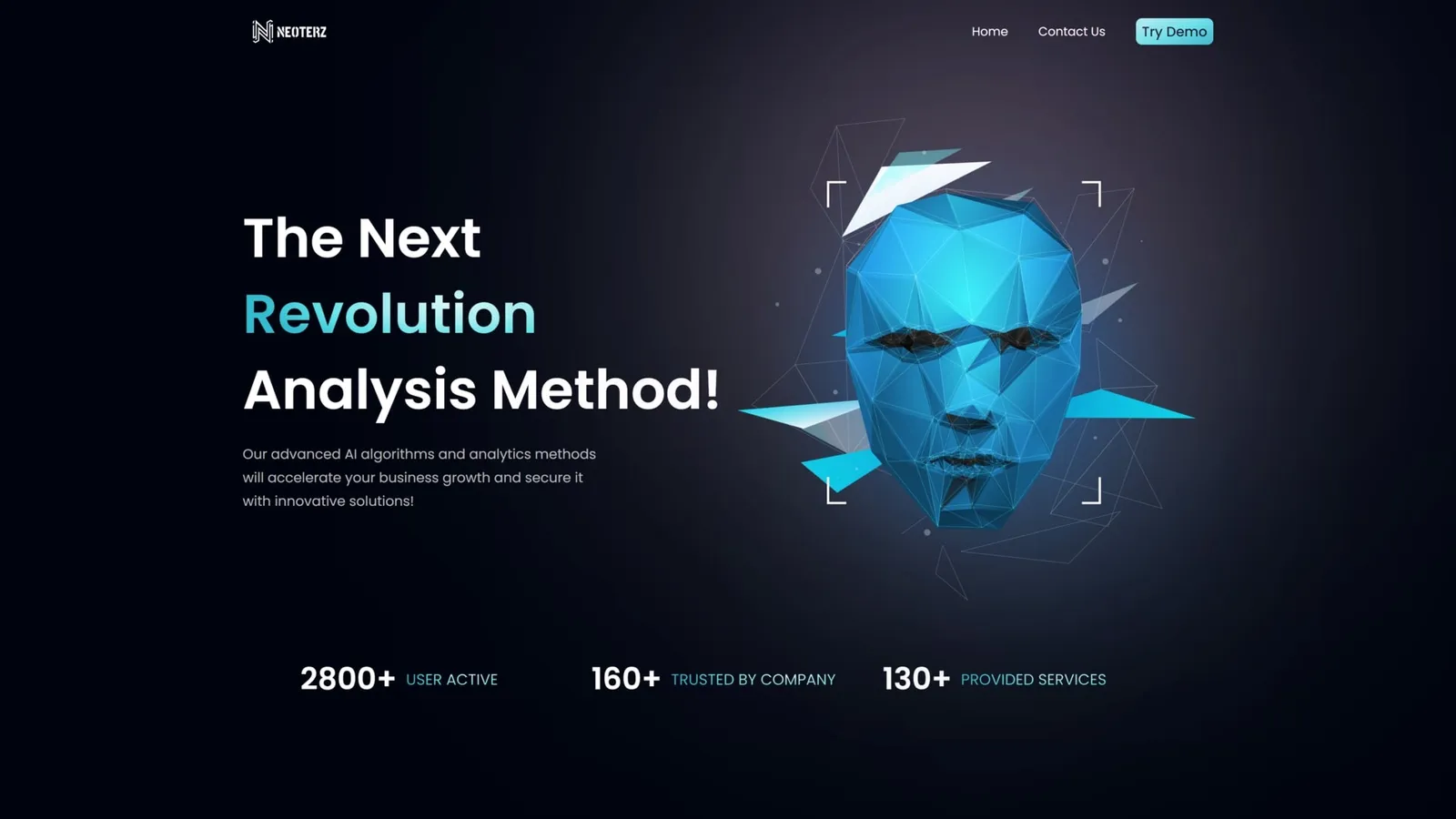
NEOTERZ was my graduation project for a B.Sc. in Information Technology on the software engineering track at King Abdulaziz University, built with Abubaker Mohammed over eight months.
It is an AI-based system that counts the people who visit a store, detects theft and analyzes the data, to help businesses make better decisions and secure what they sell.
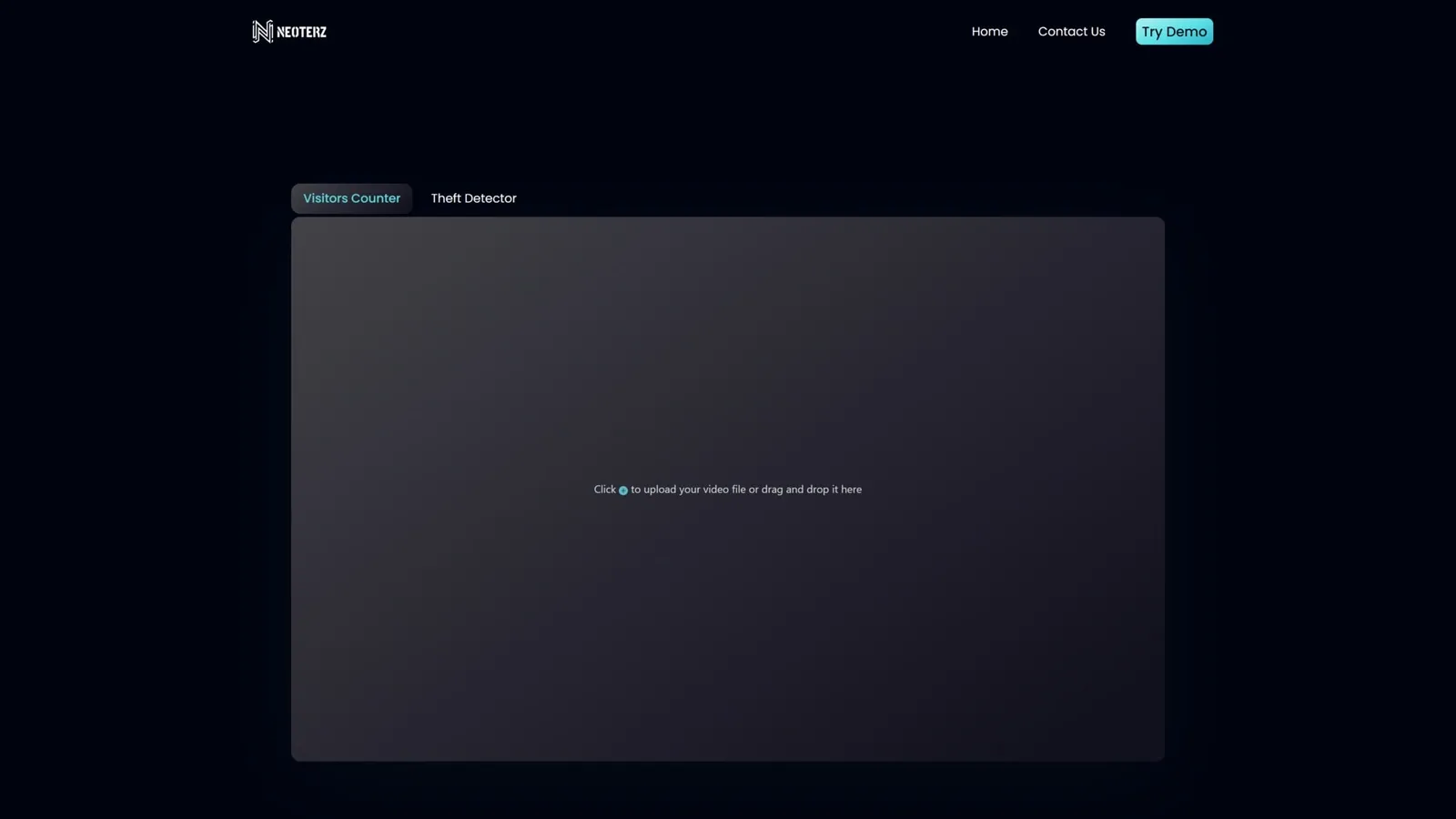
- ChoosePick a program: Count visitors or Theft detection
- UploadUpload a store video; it's saved to Azure Blob Storage
- ProcessA Python service (Flask) runs the detection model on it
- ResultThe app shows the processed video and the results
- 8 Months
- 2 People
- 3 Disciplines: AI, web, brand
02 Problem
Store owners want to know how many people come in and when, and to catch theft as it happens. NEOTERZ set out to answer both with computer vision, and to turn the counts into analysis an owner can act on.
Constraints
We had eight months beside our coursework to find or train a highly accurate model, and theft detection had to work on ordinary CCTV video.03 My role
I led a team of two, so I worked across every layer of the product.
- LeadershipLed the team and managed the project
- AIDeveloped the artificial intelligence programs
- FrontendBuilt the frontend and integrated it with the server
- QualityTested the user interface
- DesignDesigned the UI/UX, the logo and the README
- CopyWrote the website copy

- Frontend
 React
 Vite
 Tailwind CSS
 Framer Motion
 Jest
 JavaScript
- Backend
 Python
 Django
 Flask
 PostgreSQLMicrosoft Azure
 Node.js
- AI & data
 Ultralytics
 OpenCV
 pandas
- Tooling
 Git
 GitHub
 ClickUp
- Design
 Figma
 Photoshop
04 Key decisions
The choices that shaped the product. Open one to see why it was made and what it cost.
Object detection with Ultralytics models
What we chose
Ultralytics' pretrained YOLO models with OpenCV for counting and theft detection
Why
The models already detect people well, so we built on them instead of reinventing the wheel and spent our time on the counting and theft logic.
Trade-off
Time to learn the models and fit them to our two programs.
Python services behind the web app
What we chose
Django for the app and its PostgreSQL database; a Flask service for video processing on Azure
Why
Heavy detection ran outside the web app, so uploads didn't block the site.
Trade-off
Two services to deploy and keep in step.
A reusable React frontend
What we chose
React and Vite with Tailwind CSS and Framer Motion, tested with Jest
Why
Modern technologies, to keep up with the newest advances in our field.
Trade-off
Time to think, analyze and learn before we could engineer well with them.
One identity from product to poster
What we chose
The logo, UI, README and graduation poster designed as one system
Why
A jury sees the poster, the demo and the README; one identity makes them read as one product.
Trade-off
Time spent on design, and it was worth it: it sharpened our creative thinking.
05 Result
Delivered in June 2024 as our graduation project: the AI programs for counting and theft detection, a responsive web interface connected to the server, and a brand that carried through the product, the poster and the README.
- 2 AI programs: counting and theft detection
- 1 Web app connected to the AI services
- 1 Brand, from logo to poster to interfaces
What I learned
This project taught me a lot: AI, frontend, backend, design, project management and leading a team.
With thanks to
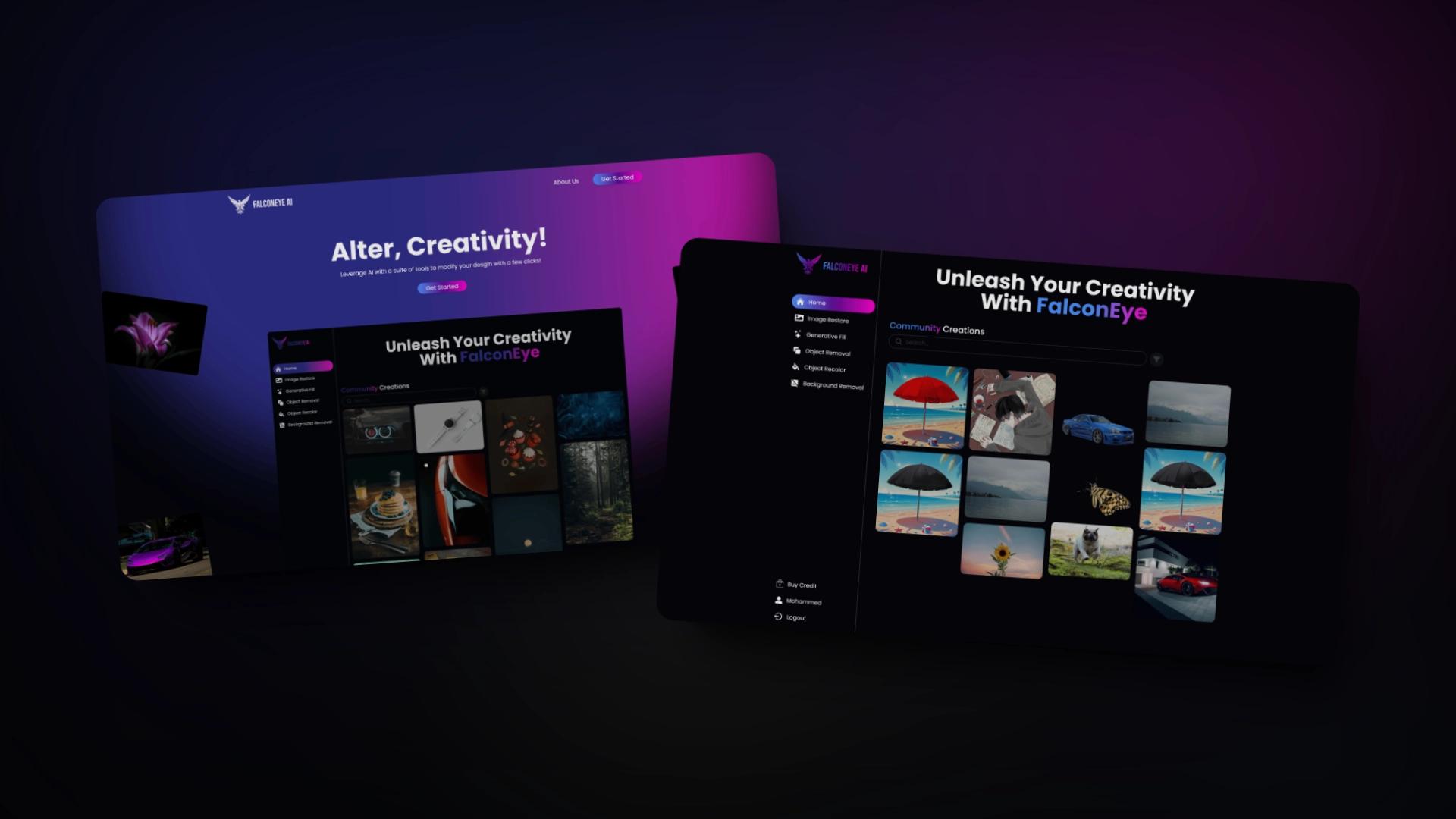
Next project: Falcon Eye AI
A browser tool for AI image edits: remove objects or backgrounds, recolor, fill and enhance in a few clicks.
Questions