Case study · Personal
My Portfolio
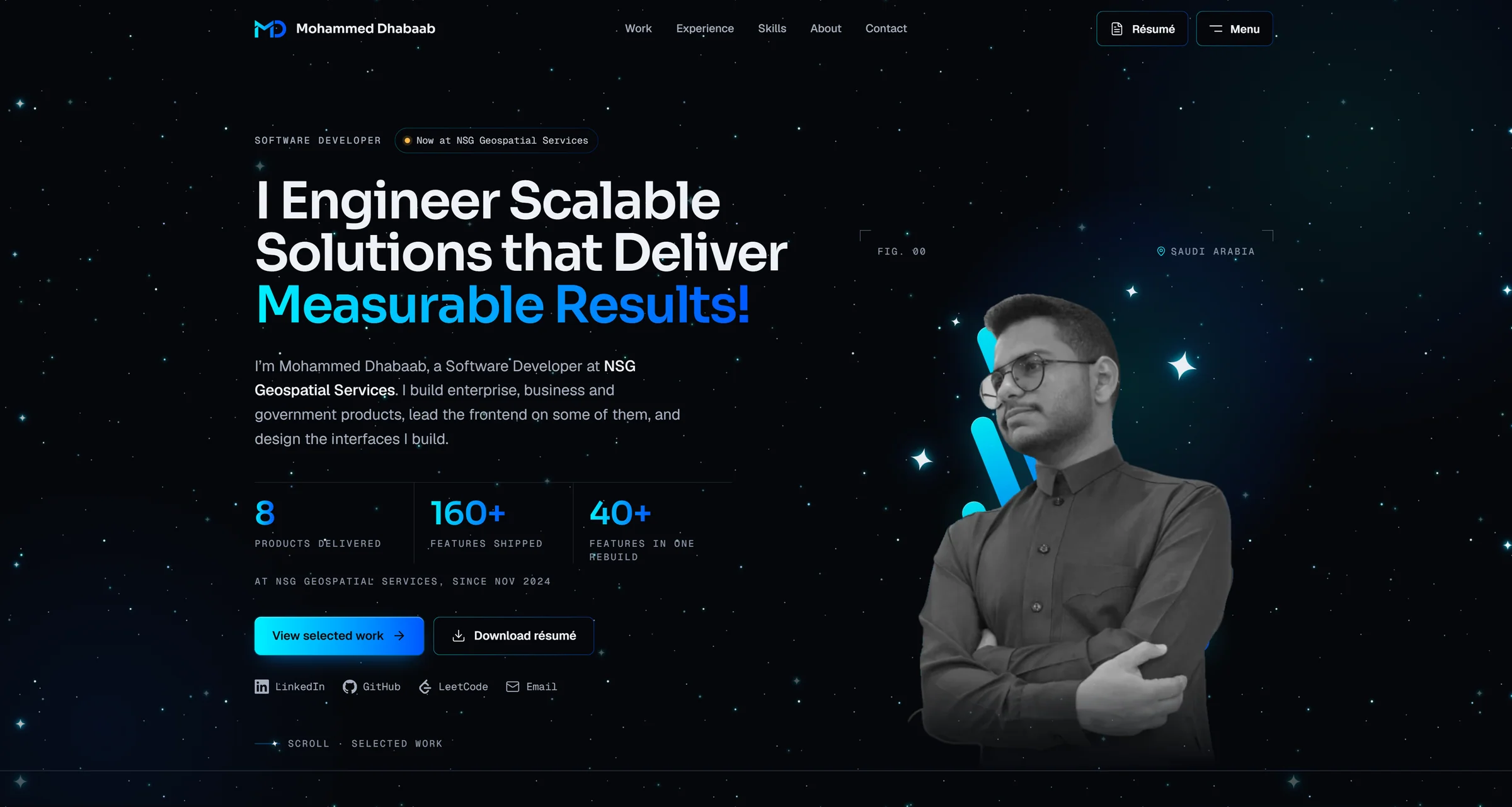
My portfolio, rebuilt from scratch: every word comes from validated content, edited in a dev-only studio, with Lighthouse 100 on mobile before launch.
- My role
- Design, frontend and architecture
- Team
- Solo
- Timeline
- 2024 – Present · rebuilt in 2026
- Context
- Personal
- Platform
- Next.js site with a dev-only content studio
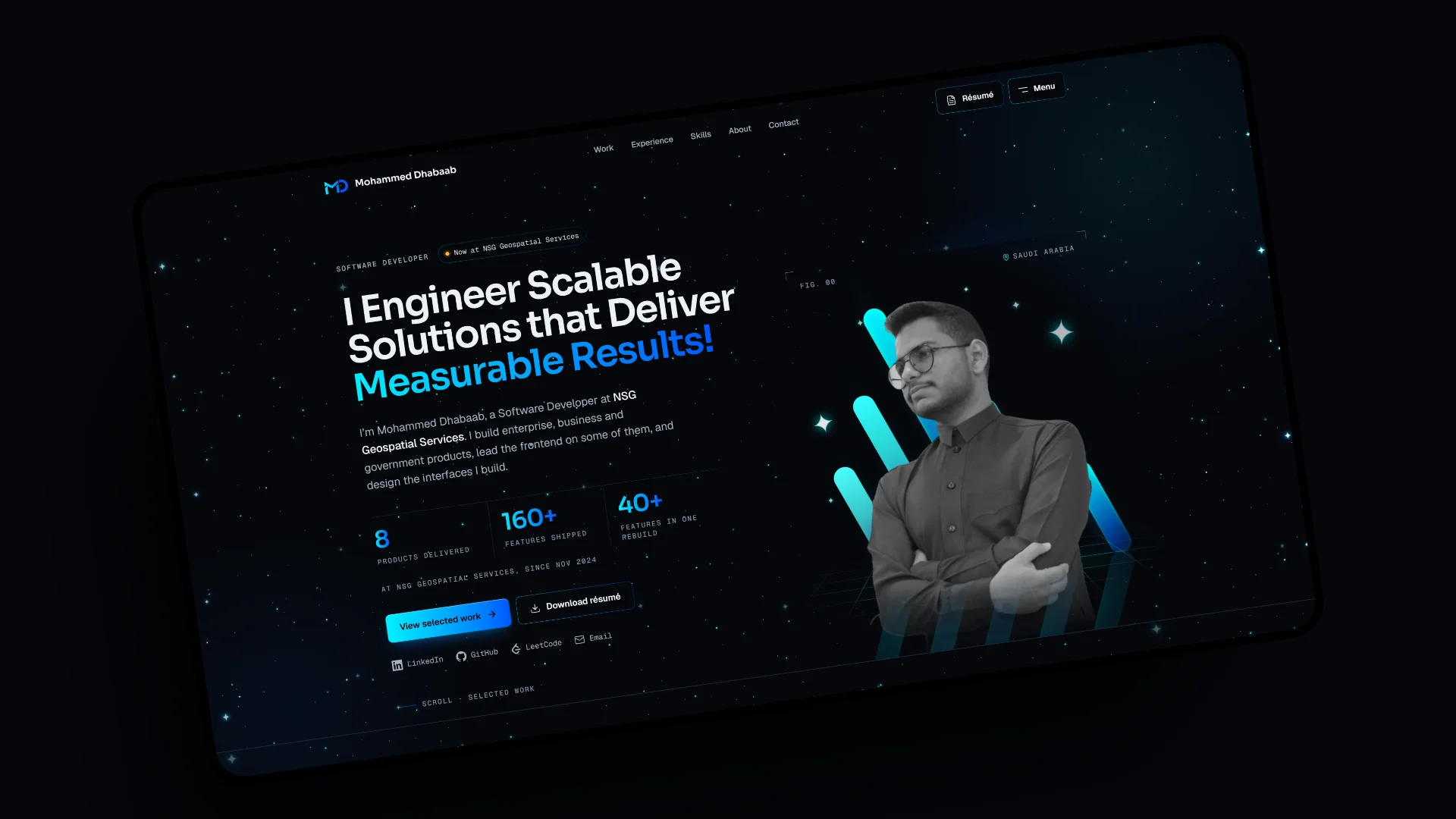
01 Overview
This site is my portfolio, rebuilt in 2026 with no v1 code left in it. Every word comes from content validated with Zod, and a dev-only Content Studio edits it and shows each change as a git diff before it writes.
- 3 Screen sizes in every design: desktop, tablet and phone
- 5 Browsers and phones in every end-to-end run
- 0 Admin pages in production: the studio runs only on my machine
02 Problem
I wanted one place that shows my skills, experience and projects in depth: case studies with real decisions, proof of quality and content I can change without touching components.
Constraints
Budgets from day one: LCP of 2.5 s or less, CLS of 0.1 or less, at most 170 KB of JavaScript for Home, zero serious axe issues and 3D that loads only after the main content.03 My role
I designed it, set its architecture and built it.
- DesignThe brand, the design system and every board, at 1440, 768 and 390
- ArchitectureFeature-Sliced Design, enforced by ESLint boundaries and Steiger
- ContentZod schemas for every content file and a dev-only studio with diff review
- MotionGSAP scroll effects and three.js scenes behind reduced motion and device checks
- QualityVitest, Playwright with axe on three browsers and two phones, visual snapshots and Lighthouse CI
- Frontend
 Next.js
 React
 TypeScript
 Tailwind CSS
 shadcn/ui
 Radix UI
 JavaScriptGSAP
 three.js
 Zod
 React Hook Form
 Vitest
 Playwright
 ESLint
 Prettier
 Vercel
 Git
 GitHub
 Zustand
 Docker
 GitHub Actions
- Motion and 3D
- GSAPthree.js
- Content and Forms
- ZodReact Hook Form
- Testing
- VitestPlaywright
- Quality and Delivery
- ESLintPrettierGitHub ActionsVercelGitGitHubDocker
04 Key decisions
The choices that shaped the product. Open one to see why it was made and what it cost.
Typed content, reviewed in git
What we chose
JSON content files validated by Zod 4 and read at build time
Why
Git reviews every change, and a bad entry fails the build instead of reaching visitors.
Trade-off
Editing needs the repo and the local studio; no quick edits from a phone.
A studio that never ships
What we chose
A Content Studio that runs only on localhost in development and is dropped from production builds
Why
A friendly editor without an admin surface anyone can attack.
Trade-off
Every content change still goes through a commit and a deploy.
3D after the content
What we chose
One hidden three.js renderer that draws each 3D spot after the main content, with a still image for phones, low-power devices and reduced motion
Why
Motion that doesn't cost the performance budget.
Trade-off
Every 3D spot needs a still version too.
Rules before code
What we chose
Written rules for every part of the build, from architecture to testing, before any feature code
Why
Every change follows the same standards, so the code stays consistent as it grows.
Trade-off
Time up front, and rules to keep current as dependencies change.
05 Result
On the production build, Lighthouse scored 100 for performance, accessibility, best practices and SEO on mobile for Home, the work index, the case studies and the résumé, with an LCP of 1.2 to 1.4 seconds.
- 100 Lighthouse, all four categories
- 116 Unit test files
- 20 End-to-end specs
What I learned
Writing the rules before the code paid off.
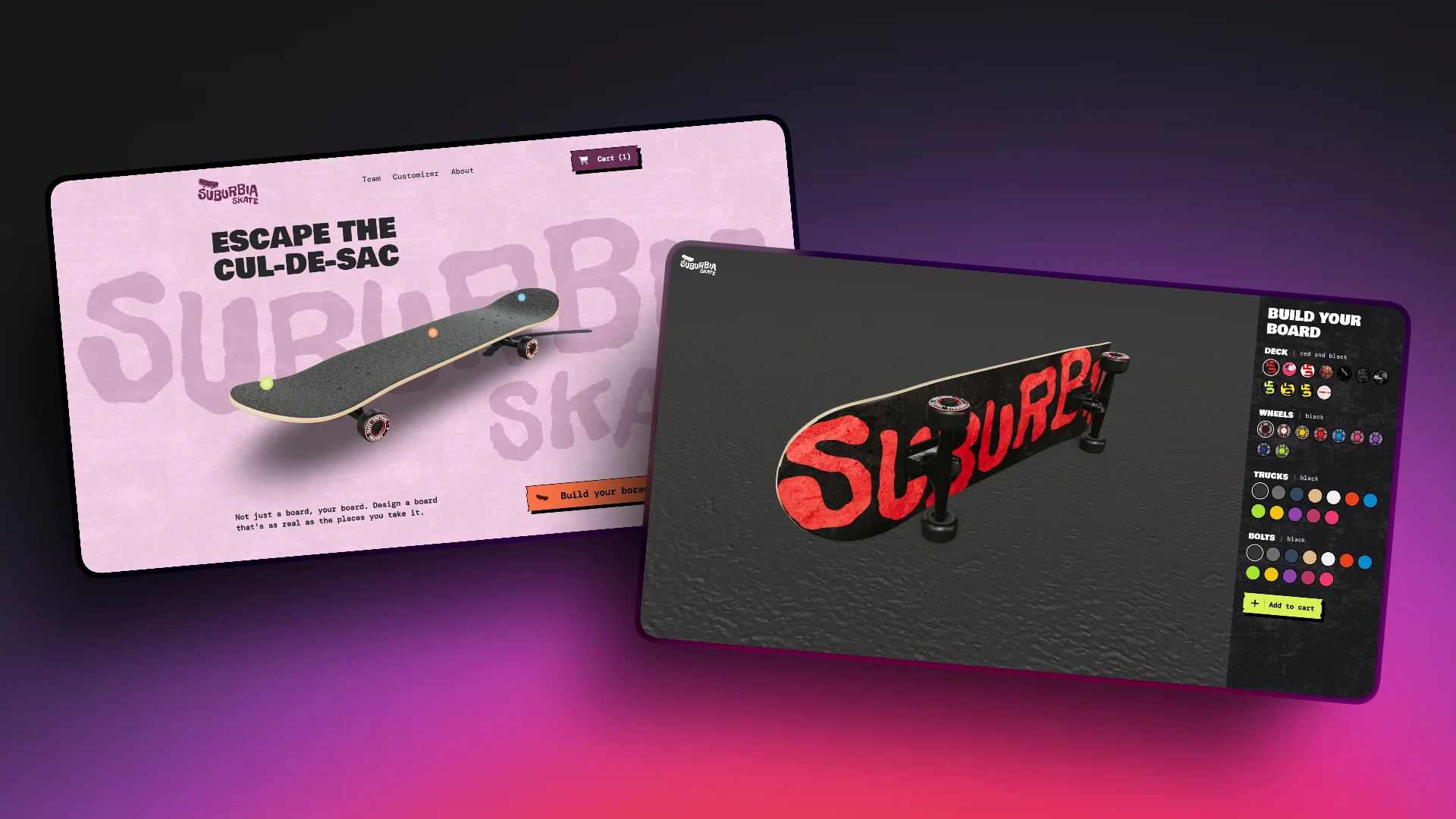
Next project: Suburbia Skaters
A 3D skateboard brand site in Next.js: build your own board in real time, try tricks on the hero board and edit every section in a CMS.
Questions